orwograph
Hello everyone,
This might be a slightly outdated question, but here goes: What happens if you develop old ORWO colour/slide films (NC and UT series) using the C-41 process or the E-6 process instead of the intended ORWO processes? Will I just end up with the wrong colours, or possibly a black-and-white image, or perhaps a completely black or transparent film? I’m sure there are some ‘old hands’ here who’ve tried this before.
Please, no discussions now about the pros and cons of developing such old film stock – one person’s nightmare, another’s welcome surprise... to each their own.
Many thanks in advance, best regards,
Peter.
ChristianKolinski
Hello everyone,
This might be a slightly outdated question, but still: what happens if you develop old ORWO colour/slide films (NC and UT series) using the C-41 or E-6 processes rather than the intended ORWO processes? Will I just get the colours wrong, or possibly a black-and-white image, or perhaps a completely black or transparent film? Surely there are some ‘old hands’ here who have tried this before.
The problem with the old Orwos is that these films aren’t designed for the standard temperature of 38°C used today.
NC19/NC21 was processed at 21°C, UT18/UT23 etc. at 25°C. Even during drying, a maximum of 30 to 40°C was permitted.
Attempting to run a UT18 through E6 resulted in the emulsion peeling off completely in the Bleach bath. That ruined both the film and the chemicals.
Which is why I sometimes get rather fed up with people (no offence to you – the question came up elsewhere later) who want to send these films in taped-up cassettes to a commercial lab.
If you want to develop them, your options are either to prepare the colour chemistry yourself (the recipes are publicly available, though both processes are based on CD1 ‘diethyl-p-phenylenediamine sulphate’ – I don’t know how or where to source that) or a long series of trial-and-error experiments with E6/C41 chemistry at room temperature. The only question is whether there’s still enough material in circulation for the latter... :ph34r:
Regards
Christian
orwograph
Thanks for the info! So it’s mainly the temperature and time that make the difference, rather than the developing chemicals – that’s good news! I think I’ll go for the C-41 kit and start with the old Orwo times at Orwo temperatures. Also, I mainly have UT-18 films, so they’ll be cross-processed, which certainly won’t do any harm to the colour shift effect... something’s bound to come of it – let’s see!
Thanks, best regards,
Peter.
EugenMezei
Thanks for the info! So it’s mainly the temperature and time that make the difference, rather than the developing chemicals – that’s good news!
That’s not good, that’s complete nonsense.
C-41 isn’t some sort of further development of the Agfa process but something completely different. Process, chemicals – nothing is common to both methods.
I’ve still got an old ORWO development kit here, which I’ll soon be using to develop a UT18 and an even older Agfa CN17. If you like, you can send me your film too. Mind you, I can’t guarantee anything, as the developer is old as well.
[/quote]
orwograph
Thanks for the offer! But I’ll probably try cross-processing the film with C-41 first – obviously the processes are different, but after doing some research on various forums, I’ve decided to give it a go. It’s certainly not ideal, but grain and false colouring don’t really bother me at the moment, so what the heck.
Opinions on the developability of C-41 for black-and-white film vary quite a bit, but back in the day all sorts of people advised me against developing black-and-white film in coffee, which in the end turned out pretty well and produced usable results. If I wanted to make sharp, brilliant slides, I’d go for Fuji rather than Orwo :ph34r:
I’ll report back here on the results.
Ciao,
Peter.
ChristianKolinski
Thanks for the info! So it’s mainly the temperature and time that make the difference, rather than the developing agents – that’s good news!
?, no, that’s not the case, nor did I write that. The Orwo processes are based on Colour Developing Agent Type 1 (CD1), whereas current processes use CD3 or CD4 – and even those two are hardly interchangeable.
That doesn’t mean you *couldn’t* end up with something colourful, but I wouldn’t count on a quick sense of achievement.
EugenMezei
But I’ll probably try cross-processing the film with C-41 first
I’ll just pull it straight out of the cassette in the light. The result is the same (no grain and false colours), but it’s less hassle.
Eugen
orwograph
I really don’t know what it is about this and similar cross-processing topics that always seems to provoke such emotional responses. I’ve decided to hold off on processing my Orwo films in C-41 for the time being, though this is for financial reasons – the C-41 developer kit was simply too expensive for me to use for such experiments at the moment. So I cross-processed the Orwo UT transparency films in the Orwo negative developing kit at 21°C, which worked wonderfully at first, with the exception that the old colour material had gone hopelessly off and the film was only halfway usable in the middle. But still. Colour photos came out, the negatives could be scanned, image information was preserved – that’s a positive result.
So I carried on experimenting with the Orwo chemicals I had to hand. I took a roll of film intended for C-41—freshly bought from the chemist’s—and dumped it into Orwo’s 1980s-era solution at 21 degrees Celsius, and lo and behold—colourful images, no fog, results that looked perfectly acceptable at first glance.
In a developer solution intended for Orwo films and probably similar to some old Agfa process. Certainly not C-41; no idea whether the developer is now CD-1, 2, 3 or 4. In any case, this gives cause for hope – why should new films produce colourful images in the old process, but nothing at all the other way round? I can hardly believe it. Of course, C-41 must then be kept at 21 degrees; we don’t want the gelatin to peel off.
Peter.
Wolfgg
Peter: You could also process the old films in RA4 (no joke); it works with C41, and might also produce colourful results with "old Agfa".
Best regards, Wolfgang
EugenMezei
Peter, that wasn’t emotional at all. It was simply a statement of fact; the result of what you were planning to try would have been the same as simply pulling the film out of the cassette.
Even if you now think that’s personal (it isn’t!): I don’t think experimenting is a bad thing, but only once you’ve understood the theoretical basics. For example, you say you developed the film in ORWO chemistry for negative film; you could have done a positive development with minimal effort if you’d understood how the whole thing works. In this regard, I recommend Teicher’s book. It describes all the ORWO processes (or, in the older editions, Agfa), and you’ll realise that you were just one step away from developing the film correctly.
As for concluding from C-41 film in ORWO chemicals that the reverse process would also work (leaving that aside...), I see no evidence to support that. You can certainly give it a go. I might do it myself, but for films that might contain important images, I’d first familiarise myself with the theoretical concepts. The images, which could potentially be ruined by my lack of knowledge, would simply be too important to me.
Eugen
piu58
Peter, that wasn’t emotional at all. It was simply a statement of fact; the result of what you were planning to try would have been exactly the same as simply pulling the film out of the cassette.
I’ve known that for ages. The film is wound up in the cassette. ‘Unwinding’ means nothing more than pulling the film out of the cassette. The labs are cheating us!
orwograph
... and that’s when you realise you were just one step away from developing the film properly.
Then please do explain it to me. Perhaps I really haven’t understood it properly. As I see it, this is how it works – please correct me if I’m wrong:
I have four baths. The first (developer) develops the silver halide during exposure to light using ‘excited’ colour couplers. I’m not sure whether the developer also reduces the silver halide to silver. The second bath (stop bath) stops the development process. The subsequent Bleach bath converts metallic silver (so it must have been ‘developed in black and white’?) into soluble silver salt, so that the fourth bath, the fixer, washes out all the unexposed silver halides and all the (‘exposed’) silver salts.
If I wish to obtain a slide, I must first carry out a black-and-white development without fixing, which converts the exposed areas into metallic silver. As a result, the colour developing agent appears to have no further effect on the colour couplers in these areas. In the next step of the second exposure, which can optionally also be carried out chemically, a negative of the negative is then logically produced. All subsequent steps are identical to colour development, as described above. The colour developing agent develops the couplers of the positive, the Bleach bath converts all metallic silver back into salt, and the fixer then removes this silver salt. The colour couplers of the negative image do not turn into colorant because the black-and-white development blocks them in some way.
More or less correct? Completely wrong?
Please clarify...
Peter.
cfb_de
Then please do explain it to me. I might genuinely have misunderstood. As far as I can tell, this is how it works – please correct me if I’m wrong:
Hi Peter,
You’ve got the gist of it. In today’s colour film (it used to be different with older types like Agfacolor/Kodachrome), there are several things in the emulsion per layer: A silver halide, to make the whole thing light-sensitive, various additives (to stop the stuff developing itself) and, among other things *important*, a so-called ‘colour coupler’ per emulsion.
The latter ensures the corresponding spectral colour of the emulsion after processing.
In colour negative development (to put it extremely simply!), the following now takes place:
The developer (CD-something) first develops a latent silver image into a visible image. Because the developer is compatible with the colour couplers present in the respective emulsion layers, there is also a reaction of the invisible colour coupler to form a colour cloud in the vicinity of the silver image.
In the Bleach bath, the silver image is bleached away (otherwise the desired colour negative would still be opaque in key areas due to the silver image), and in the fixer, unexposed/undeveloped silver halide is removed.
What remains is a silver-free negative that contains only the colour information. This is why colour films do not have a grainy texture, but rather a ‘cloudy’ structure.
Colour slides work in exactly the same way in principle, except that a classic black-and-white reversal development (nowadays mostly using chemical reversal) takes place beforehand (before the colour coupling!). The latter can also be achieved in black-and-white using, among other things, stannous chloride.
Your problem with this old colour film now boils down to the following simple fact: the developer must be able to interact correctly with the colour couplers contained in the film so that the correct colours emerge. And this developer is no longer available (unfortunately, there are also almost no suitable recipes for making it yourself).
That is why Eugen wrote that you can ‘unwind’ the film from its reel in daylight straight away if you want to process it in C41. Nothing is cross-processed in C41; it’s more a case of being ‘killed’. Cross-processing is when you run an E6 (slide) film through a C41 process – and not the other way round. That works and produces the most vivid false colours, just like a C41 film in the E6 process. Because in both cases, the developers can do something with the colour couplers in the emulsion.
However, that’s unlikely to be the case with Orwocolor/Orwochrom in C41/E6 (my guess, based on a look in the chemistry book and an examination of the structures of the developers/colour couplers).
Best regards,
Franz
peaceman
So I can only recommend this sort of lively, open-minded experimentation.
Of course, you wouldn’t do this with your irreplaceable wedding photos, but with test shots and/or film scraps!
Yesterday I had another go at experimenting wildly (and without applying any of my limited knowledge of chemistry) and got some wonderful results. Now I know that E6 film in RA-4 at room temperature certainly produces colour images, though compared to ‘normal’ cross-processing, this is child’s play.
And I know that R3 paper in RA-4 does produce a colour image, but it seems to be hidden behind a silver layer. I’ll be experimenting freely with bleaching agents soon.
Conversely, not bleaching C-41 but simply fixing it after the CD can also produce absolutely wonderful, high-contrast images with grain and a “gangsta style”.
It will certainly take time before one can apply such techniques specifically to a subject — but bold experimentation is the foundation for being able to master such techniques in the first place!
Last but not least: with the exception of the K40, I’ve so far ended up with a (false-colour) image with *every* Super 8 film in E6. Even with Orwo UT materials.
orwograph
Yes, I agree – experimenting is important if you want to achieve any new results. The theory suggests that this or that might not work at all, but as practice shows, I can certainly develop new C-41 films in ancient ORWO and get interesting colour results. The reverse scenario (ORWO in C-41 at 21 degrees Celsius) is still to be tried. But if colour couplers and colour chemistry are so different, the C-41 in the CD-1/CD-2 shouldn’t produce anything either. Yet it does, for heaven’s sake, and we get very nice retro-style colours with a slight magenta cast:
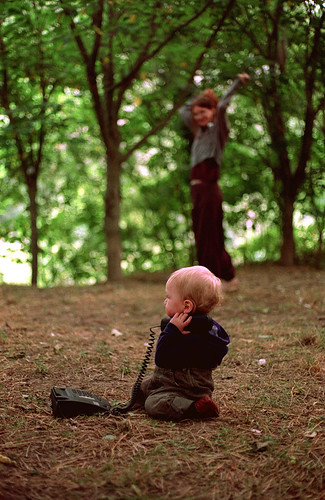
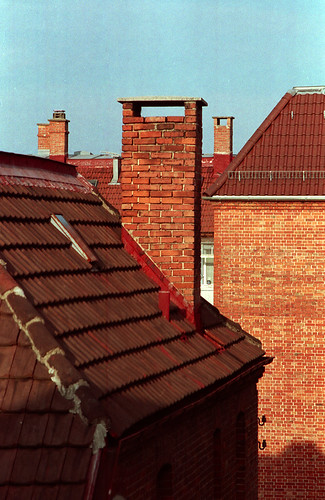
I’ll see if I can find a cheap C-41 kit somewhere, then I’ll give the ORWOcolor a go.
Regards,
Peter.
Wolfgg
For those who are interested, Tetenal once produced a universal Neofin-Color. It could actually be used to develop all colour negative films available at the time (around 1974), using both the Agfa and Kodak processes.
The following films are listed as having developability:
Agfa-Gevaert:
Agfacolor CN14
Agfacolor CN17
Agfacolor CNS
Photo source:
Revuecolor 2000
Fuji:
Fujicolor N100
Fujicolor NK
Kodak:
Kodacolor-X
Ektacolor-S
Ektacolor-L
3M:
Color Print
Turaphot:
Turacolor Negative Universal
Turacolor Negative Mask
VEB-Filmfabrik Wolfen:
Orwocolor NC16
There is also a pink sheet included with development instructions for Kodacolor II (21 mins at 20°C).
It’s just funny to see what the films were called back then. A CN14 would certainly be fun today too; given its speed and Schwarzschild behaviour, even if left unexposed, it wouldn’t have any fog even after 50 years.
Only Tetenal probably knows which CD was in Neofin-Color back then.
Twelve years ago, I tried to recreate Neofin-Color from scratch using raw chemicals, basing my approach on the formula for CD1 given on p. 99 of ‘Beutler, Meine Dunkelkammerpraxis’. I used Agfa Optima 125 and Ultra as test films, i.e. C41 films in CD1. The results were: masks far too intense and slightly different in colour with each run. This produced proper ‘colour films’. Due to a lack of time, I did not pursue this experiment any further.
Regards, Wolfgang
EugenMezei
Wolfggg, none of the films on the list are C41, though.
I’m all for experimenting, but – for me, at least – it’s much more interesting when you can explore the theoretical background as well. If something can’t work, precisely because it has been proven theoretically to be unworkable, I see no point in going to the trouble of trying to make it work through some sort of alchemical sleight of hand. Also, just because it works one way doesn’t mean it would work the other way round; there’s a flaw in the logic there.
Eugen
EugenMezei
... and that’s when you realise that you were just one step away from developing the film properly.
[Attempt at an explanation]
More or less correct? Completely wrong?
Please clarify...
Peter.
Actually wrong, but you’ve grasped the most important part that makes all the difference. Before colour development, a black-and-white development is carried out, followed by the second exposure, before the colour development.
Why don’t you just get Teicher’s book? The individual steps are explained there and the sequence is even illustrated.
The complete formula is also given; you could recreate both kits (negative and slide) for the Agfa/ORWO process. It shouldn’t be too difficult; the chemicals are quite readily available.
Teicher’s book is also recommended for understanding many other theoretical aspects of photography and photographic processes.
Eugen
cfb_de
Hello Eugen,
For clueless people like me, an ISBN or some other precise description of the book would be really helpful.
Just the usual details: title, publisher, author. That way, you can also find those books from the Comecon bloc that were only published locally and don’t have an ISBN. It also saves you from wasting time searching through second-hand book catalogues.
Best regards,
Franz
EugenMezei
Teicher, Gerhard. Handbook of Photographic Technology
VEB Fotokinoverlag Halle
I have the 1st edition from 1963.
It’s certainly not a local publication; in fact, there were several editions. It’s a standard reference work.
Also highly recommended, and the ORWO process is described there too:
Stapf, Helmut. Photographic Practice
Fachbuchverlag Leipzig
I have the 6th edition from 1960. However, this book was also translated into Hungarian and Romanian; I think I’ve seen a Polish edition listed somewhere too. So it was also well-known in the Eastern Bloc. It is, however, slimmer than Teicher’s and not as comprehensive—it covers a few fewer areas.
Eugen
